
The Sure Heart
Emotion, Healing, and Buddhist Psychology
About this Course
Can meditation and mindfulness support us in our emotional life? Absolutely. The Buddha’s teaching is frequently understood as a kind of psychology, or science of mind, and the core of the Dhamma is a set of teachings on how to work with the strong habitual emotions and energies that lead to harmful action. The result of practice is not an abstract metaphysical wisdom but a profound happiness and peace that is called “the sure heart’s release.” This release naturally includes a healing of old wounds and a restoration of healthy relating with ourselves and others.
In this 5-week course we’ll look at the Buddha’s teachings on emotion and healing, exploring how to bring mindfulness, insight, and skillful response to powerful states like love, fear, anger, and grief. This is the fourth in a series of practice and study courses aimed to build a strong foundation for Theravāda Buddhist training. You do not have to have taken the other courses in the series to take this one, and beginners are welcome.
Each week includes a primary topic, readings from the discourses of the Buddha, a meditation practice, and questions for reflection and inquiry. We will read original texts from the Pāli Canon as the source of our meditation instructions, and weave in supporting material from contemporary neuroscience and psychology. You will come away with deepened skill in Buddhist mindfulness, and a framework for bringing the discernment of spiritual inquiry into every part of your life.
Created with New York Insight and Sati Center, fall 2025.
Take this Course
All courses are offered in the Gift Economy model. This course is available on a wide sliding scale, based on self-assessment of your income and ability to offer your resources in a way that supports others with lesser resources to attend. Please support us in using the Gift Economy model by engaging sincerely with the process and selecting the highest level you can on the sliding scale (or beyond it). Your generosity directly gifts scholarship support to those who need it, and allows us to share these teachings with everyone who might benefit from them, regardless of access to wealth. Thank you!
SELECT A TIER TO ENROLL:
Further scholarships are offered as widely as possible and based on request. Our goal is to not turn anyone away for lack of resources, both for this course and future offerings. Email us here to request a scholarship.
What’s included
-
We start our exploration with the basic frameworks of inner life taught by the Buddha. Unlike many European philosophies, the Buddha did not divide thoughts and emotions into two separate categories of inner experience. Both are part of what is called citta (pronounced “chitta”), which can be translated as “mind” or “heart.”
We will cover the five aggregates (khandha) that categorize the important features of conscious experience, and the three “marks” or “characteristics” (tilakkhaṇa) that are the experiential nature of each of these aspects of our inner life.
You will receive a solid foundation in how the Buddha talks about these fundamental principles of experience, and the disciplines he suggests for working with them.
This section includes:
Reading content
2 Recorded meditations, 30 minutes and 10 minutes
Recorded class teaching, 1.25 hours
-
In this class we read texts that explore the interaction between intention, effort, attention, and action. The central distinction the Buddha used to classify inner qualities, states, and experiences was whether they are wholesome/skillful (kusala) or unwholesome/unskillful (akusala).
We see this in the lists of the five hindrances and the seven awakening factors. Through our practice we learn to diminish and prevent the hindrances, and to increase and sustain the awakening factors.
The emphasis on active cultivation is central to the Buddha’s theory of agency, or will. We are subject to the results of our own past actions, called kamma (action), as well as the impact of the actions of others and the environment. At the heart of kamma is intention—it is the skillful ethical or unskillful unethical intentions behind our actions of body, speech, or mind that create the force that moves us forward in our lives and into the next life. And to cultivate skillful action, we need wise attention (yoniso manasikāra).
This section includes:
Reading content
2 Recorded meditations, 30 minutes and 10 minutes
Recorded class teaching, 48 minutes
Recorded Q&A session, 15 minutes
Further study links
-
In this week’s class we’ll look at how two traditions think about kamma—actions and their impacts. The Jains feel that physical actions carry more kammic weight than relatively insubstantial mental experiences. The Buddha says the opposite, giving examples of how primary the heart/mind is in determining our states as well as the actions we take.
This debate is relevant for our exploration of our psychology because it takes us to the heart of the Buddha’s teaching on agency. Exactly how do we express our will and make choices? We do it through this aspect of the heart and mind that can move with intention and purpose.
This section includes:
Reading content
2 Recorded meditations, 30 minutes and 10 minutes
Recorded class teaching, 1 hour
-
At the heart of Buddhist psychology is the non-intuitive insight that the thing we call “I, me, my self” is not a thing at all, in the sense of having what’s philosophically called “substance.” But if there’s not a “substantial reality” behind our sense of being an individual, then what are we? This is not just a challenge for those of us raised in theistic cultures that assume the existence of a permanent identity like a soul residing inside each of us. South Asian folks in the Buddha’s day also tended to think of themselves as having a permanent soul or substantial subtle identity that outlasted the body (though not everyone—there were also strong nihilist and materialist movements that denied any reality beyond immediate bodily experience).
In this class we’ll explore how identity arises whenever we grasp at the aggregates, which we do so habitually that self-reference has become our default mode. Not grasping thus leads directly to the insight into selflessness, or what the discourse calls “the cessation of substantial reality.”
This section includes:
Reading content
2 Recorded meditations, 30 minutes and 12 minutes
Recorded class teaching, 1.25 hours
-
We’ll close our series by looking at a description of the path to liberation the Buddha called “the sure heart’s release” or the “release of the heart” through the brahmavihāras. This is a core text for bringing together the practices of mettā and vipassanā, the clear seeing and cultivation of right view that matures as liberation.
The Buddha lays out a model of thinking about our place in our community as being embedded in a web of relationships with mutual accountability. Weaving together these pragmatic social teachings with the transcendent teachings on the liberation of the heart shows the Buddha teaching to both the immediate conditions of our lives in relationship and to our deepest desires for freedom and peace.
This section includes:
Reading content
Recorded meditation, 30 minutes
Recorded class teaching, 1.5 hours
The image I get when I think of these meditations in relation to my body is that of a deep, warm, and fertile core of the earth’s soil where the seeds able to withstand storms take root.
— Class Participant
Meet your teacher, Dr. Sean Oakes
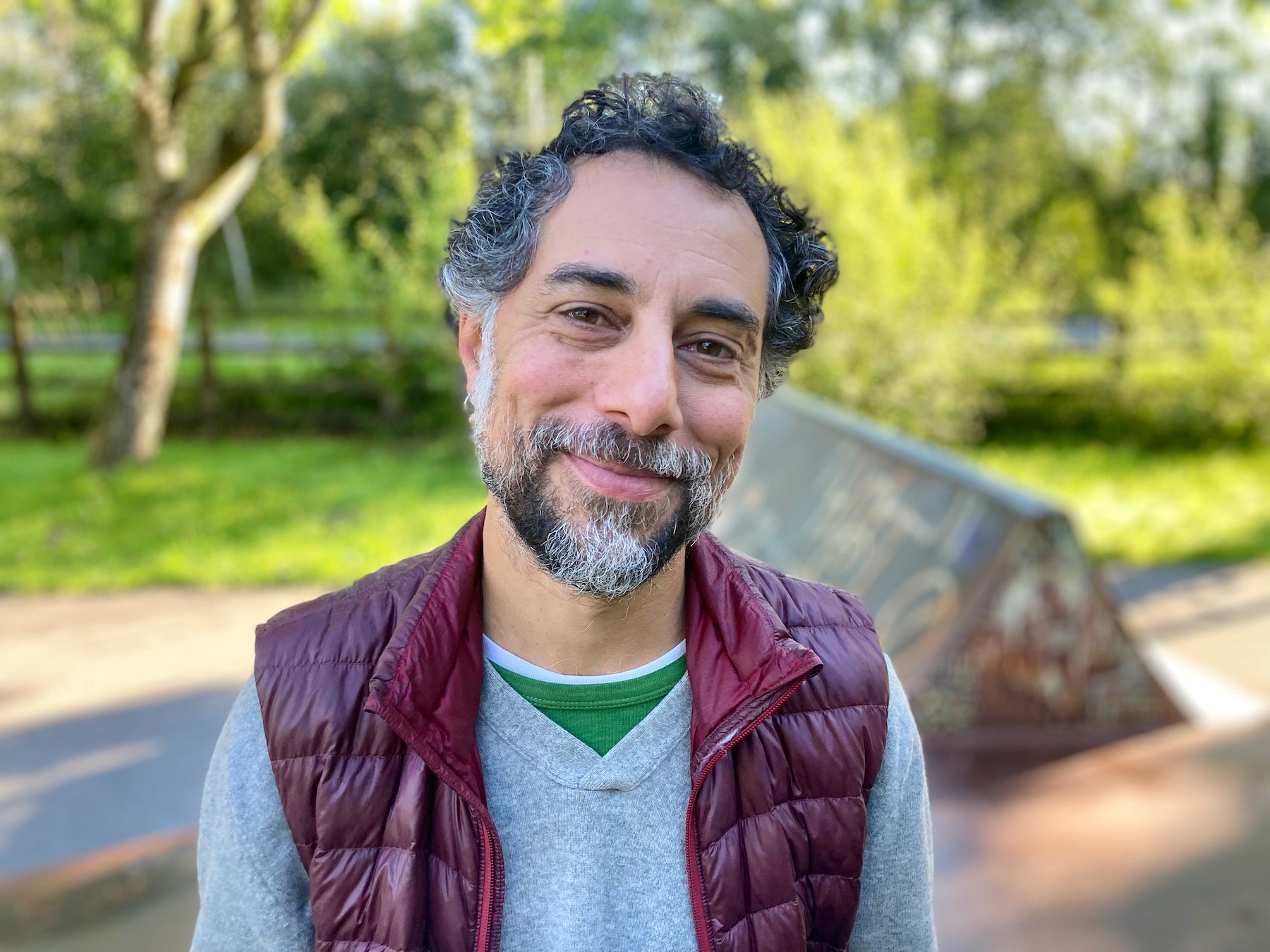
He/they, queer, Puerto Rican & English ancestry, living on unceded Pomo land in Northern California
Sean teaches Buddhism, Yoga, and somatic practice, focusing on philosophical inquiry, trauma healing, devotion, and social engagement as expressions of the Dharma. He wrote his dissertation on extraordinary states in Buddhist meditation and experimental dance, and teaches at Spirit Rock Meditation Center and elsewhere. Read more about…